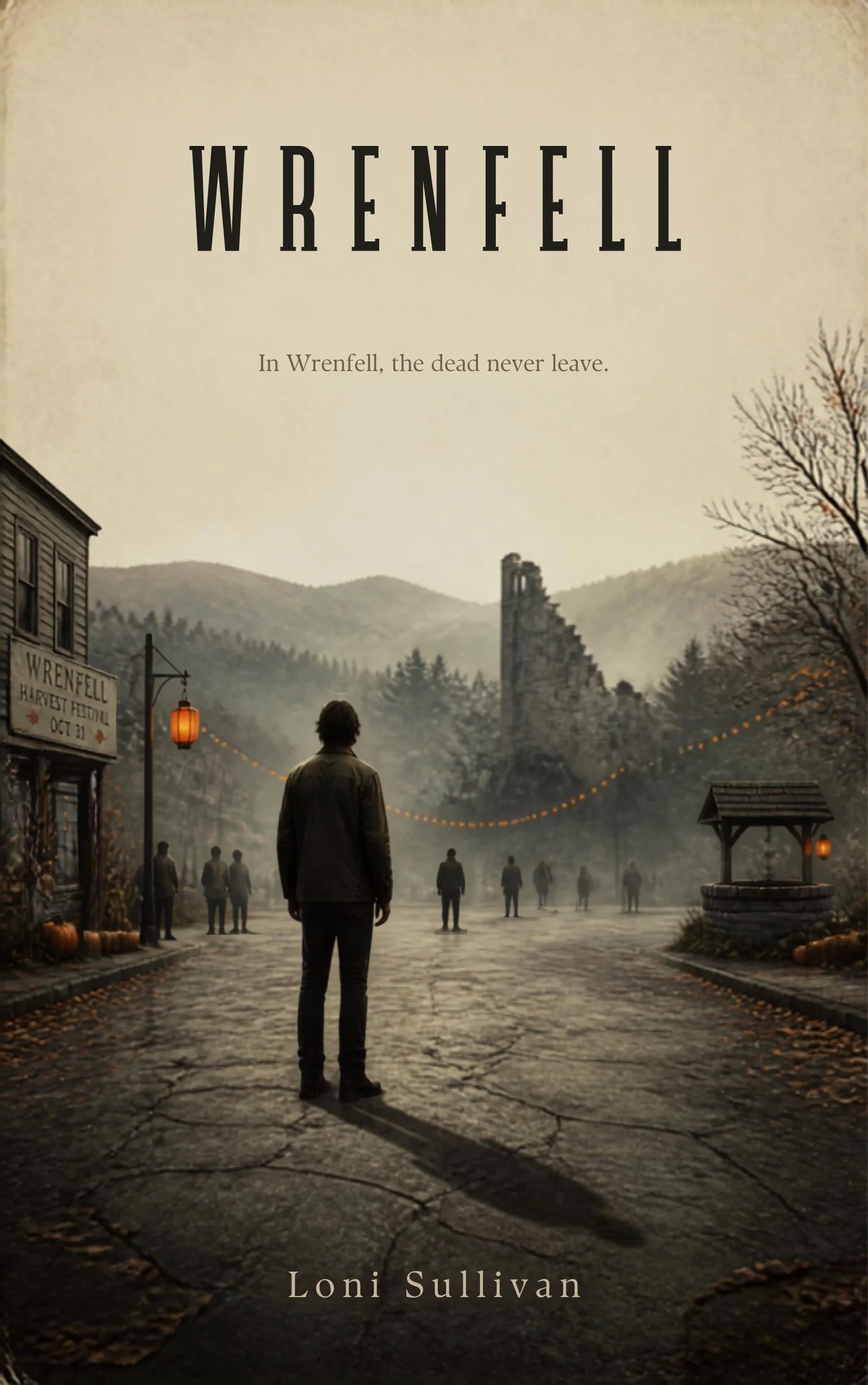
Wrenfell
Kellen Barden has always known when someone’s soul has departed. He sees it in the absence of a shadow—a warning that death is coming, even when the person is still alive. The gift has made him an outsider, haunted by the memory of Rory, the friend whose death Kellen saw coming but could not prevent.
Determined to leave that past behind, Kellen boards a bus and travels beyond Copper Lake. But when the bus breaks down outside Wrenfell, he finds a town where every living person—and every animal—has no shadow. The residents walk, work, laugh, and speak as though nothing is wrong. They cannot die, yet they are not truly alive.
As Kellen searches for a way out, he encounters Ezra, a young man whose hollow calm is interrupted by sudden flashes of memory, grief, and fear. Together, they uncover the buried history of Wrenfell: beneath the ruins of an old gristmill lies the Hollow Well, an ancient spring that once saved the town from death. Instead of restoring life, however, the ritual trapped the souls of the dying, holding them for generations while the well feeds on the town’s time, vitality, and memories.
With Wrenfell’s autumn pumpkin festival approaching, Kellen must unravel the well’s rules before the town’s unnatural preservation consumes what remains of its people. But freeing the trapped souls may mean restoring death—and Ezra may be forced to face the end he was denied long ago.
When Ezra asks Kellen to release him, Kellen must confront the question he has spent his life avoiding: is ending a life an act of murder, or can death sometimes be the final form of mercy? To break the Hollow Well’s hold, he will have to risk his own soul and witness something he has never seen before—not a shadow disappearing, but one returning.
Wrenfell is a psychological folk-horror novel about grief, impossible immortality, and the terrible cost of refusing to let the dead go.